
Last Updated on October 29, 2025 by Staff Attorney
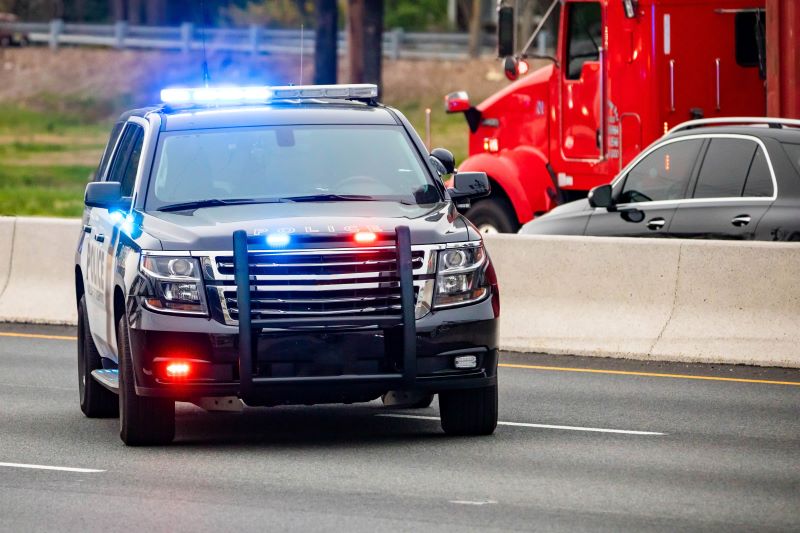
If you’ve ever driven down a freeway or highway in Nevada, chances are you’ve noticed a police car weaving back and forth across every lane. You may find yourself wondering why they’re driving in such an odd manner. This “zigzag” maneuver is known as a “traffic break” or “rolling roadblock” and it is a strategic technique used by law enforcement officials to ensure the safety of all drivers on the road for a variety of reasons.
That said, if you notice a police car or any other emergency response vehicle driving in a zigzag manner on the freeway, it is imperative that you continue your commute with extreme caution.
In this article, our personal injury attorney in Las Vegas, Nevada, Brian Boyer, will go into detail about the various reasons why you could see a police car zigzagging on the freeway.
Table of Contents
- Preventing Collision with a Road Hazard
- Assisting Construction Workers, Maintenance Workers
- Improving the Flow of Traffic
- Emergency Response to an Accident
- Special Event or VIP Escort
- Training and Drills
- Contact our Nevada Personal Injury Law Firm
Preventing Collision with a Road Hazard
One of the most common reasons why police cars drive in the zigzag pattern on the freeway or surface streets is to prevent motorists from colliding with a hazard or roadway obstruction. This could be from lost truckload debris, a broken down vehicle, or preserving the scene of an accident. By engaging in a rolling roadblock, emergency responders can create driver awareness of a potential hazard and slow down and manage the flow of traffic more efficiently. This also lessens the risk of additional accidents from happening and allows for emergency responders to reach the scene of the hazard/accident more effectively.
Assisting Construction Workers, Maintenance Workers, Tow Truck Drivers
Another common reason for the zigzag driving in Las Vegas is to protect and assist road maintenance, construction workers, and tow truck drivers. When a maintenance worker or tow truck driver is required to work on the side of the freeway near moving traffic, police officers can employ the zigzag driving technique to clear traffic congestion and to facilitate the flow of traffic around the workers. This technique allows them to create safer freeway merging scenarios which ultimately improves the overall flow of traffic while simultaneously preventing any potential accidents from occurring.
Improving the Flow of Traffic
As Southern Nevada is notorious for its perpetual construction zones and roadwork, traffic congestion has become a major issue on Las Vegas freeways. This constant roadwork can increase accident risks among daily commuters. Therefore, police officers may use the zigzag technique in an attempt to clear congestion and manage the flow of traffic more efficiently. By intermittently slowing traffic, they can force gaps that allow for motorists to merge lanes in a safer manner.
Emergency Response to an Accident
In certain situations, police may need a quick and effective way to clear the roads for emergency response vehicles, such as fire trucks, ambulances or additional police cars. By employing a rolling roadblock, officers can ensure a safe path for fellow responders to travel on without experiencing any potential delays. This maneuver is critical in life-threatening situations.
Special Event or VIP Escort
With F1, EDC, Concerts, Professional Sports and political events, Las Vegas is no stranger to special events and VIP visitors. When these events require roadblocks or temporary changes in the flow of traffic, police cars will engage in the zigzag driving pattern to control and redirect traffic if necessary. Doing so ensures the safety of VIP visitors and smooth-flowing events with little to no traffic disruptions.
Training and Drills
Police officers undergo extensive training to handle various traffic situations, including the use of rolling roadblocks. Occasionally, you might observe this maneuver being performed as part of a training exercise or drill. These practice sessions help officers refine their skills and ensure they are prepared to execute the technique safely and effectively when needed.
What if a Police Officer Hits Me While Zigzagging?
The sight of a police car zigzagging on the freeway may seem unsettling at first, but if you do see this it is important to remember that they are attempting to protect you and other motorists from a potential hazard. You should exercise extra caution while operating your vehicle in this situation. Although police officers perform this action to protect drivers, they are not exempt from accidents.
Driver error on the police officers part while engaging in a rolling roadblock can result in sideswipe accidents, rear-end accidents, rollover accidents and wrongful death. If the police officer fails to stop after hitting you, make sure you pull over to a safe place and contact 911 immediately to inform them of the accident.
Contact Brian Boyer Injury & Car Accident Lawyer for a Complimentary Case Review
Our auto accident attorney has over a decade of experience handling personal injury claims and he is prepared to fight aggressively to protect your rights. Although police officers perform this action to protect drivers, they are not exempt from accidents.
In the event you or a loved one have fallen victim to an accident or injury due to a police officer zigzagging on the freeway, contact our law firm for a complimentary consultation.
Call Brian Boyer Injury & Car Accident Lawyer Las Vegas for a free case review at 702-514-1414 or contact us online.
Related Content
- How to File a Police Report After a Car Accident
- Do I Need a Police Report to File an Auto Insurance Claim?
- How to fight a traffic ticket In Las Vegas, NV
- How Is Fault Determined in a Car Accident
Our personal injury lawyer in Las Vegas, NV never settles for less. Why should you?
Frequently Asked Questions About Police “Zigzag” Driving on Freeways
1. Why do police cars drive in a zigzag pattern on the freeway?
That maneuver is called a “traffic break.” Officers briefly weave across lanes to slow or stop traffic so crews can remove hazards, protect a crash scene, or space out vehicles to prevent pileups. Learn more about local safety risks in our guide to dangerous intersections in Las Vegas.
2. What should I do when I see a police car weaving across lanes?
Slow down, stay behind the patrol car, and follow its signals. Don’t pass the officer or change lanes suddenly. Wait until the officer accelerates or moves aside before resuming normal speed.
3. Is it legal for police to block lanes like that?
Yes. Nevada law allows officers to control traffic flow to protect public safety during emergencies, debris removal, or crash investigations.
4. How long does a traffic break usually last?
Most last only a few minutes—just long enough to clear a hazard or give emergency crews room to work. For what to do after a freeway collision, see our Las Vegas car accident resources.
5. Can I get a ticket if I try to go around the officer?
Yes. Passing a patrol car during a traffic break is dangerous and may result in fines or reckless-driving charges. Always follow the officer’s lead.
6. Why do police weave instead of just using lights and sirens?
Weaving creates a physical barrier that prevents drivers from speeding past. It’s a proven way to slow traffic evenly and prevent rear-end collisions near hazard zones.
7. What should I do if I’m rear-ended during a traffic break?
Pull over safely, call 911, exchange information, and document the scene. For help with your insurance claim, visit our Las Vegas car accident page.
8. Who is responsible if a crash happens during a traffic break?
It depends on the circumstances—fault could rest with a driver following too closely or ignoring signals. A Las Vegas personal injury lawyer can investigate liability and evidence such as dashcam footage.
9. Are traffic breaks ever used for non-emergencies?
Yes. Police also use them for planned road closures, VIP motorcades, or large public events to manage traffic safely.
10. How do I get help after a freeway crash in Las Vegas?
Get medical attention, report the crash, and gather photos or witness info. For legal help after an accident, contact Brian Boyer Injury & Car Accident Lawyer Las Vegas today.
Areas Served in Las Vegas, Nevada
Las Vegas Strip | Henderson | North Las Vegas | Summerlin | Centennial Hills | Anthem | Paradise | Spring Valley | Summerlin North | Summerlin South | Sunrise Manor | Nellis AFB | Desert Shores | Downtown South | Charleston | Northwest Area | Richfield | Downtown South | Crestwood | Angel Park Ranch | Queensridge | Arden | Casa Grande Pines | Winchester | Downtown South | West Las Vegas | Green Valley North | Lake Las Vegas | Sun City Summerlin | La Madre Foothills | Tule Springs | MacDonald Highlands | Green Valley Ranch